Kwan Woo Kim

Gatekeeping in Creative Industries

A second line of my research examines gatekeeping in creative industries: who decides whose creative work gets seen, and how technological disruption reshapes that decision.

Gatekeeping by Critics

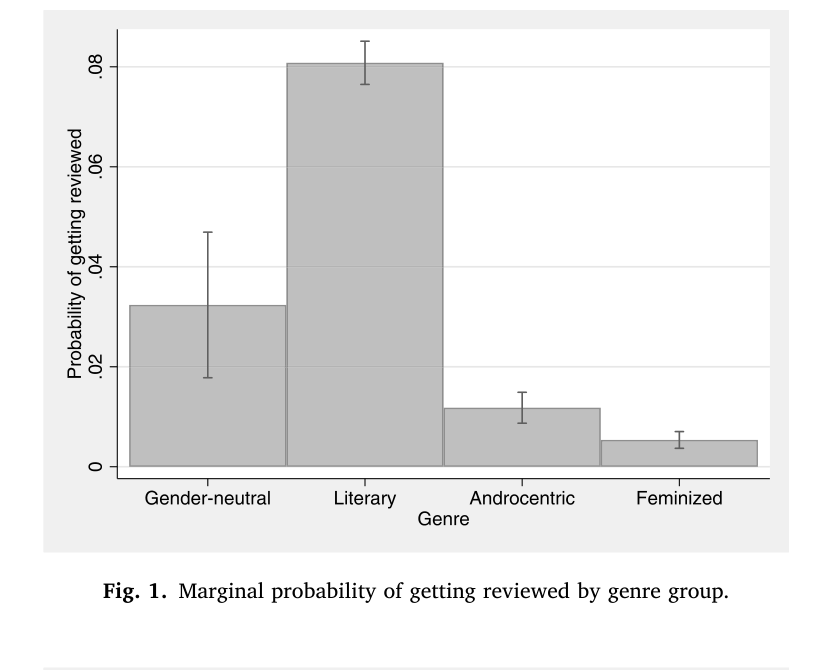
Marginal probability of a novel getting reviewed, by genre group: gender-neutral, literary, androcentric, and feminized

Kim, Kwan Woo and Phillipa Chong. 2023. “Writing By Women or For Women? Either Way, You’re Less Likely to Be Reviewed.” Poetics 96:101737.

Using a population dataset of English-language fiction, we find that mainstream book review outlets penalize women authors by excluding women-typed genres such as romance and by devaluing women-authored literary fiction. Gender devaluation in the literary field operates at two levels: categorical exclusion between genres, and devaluation of women’s work within the literary genres that are most frequently reviewed.
Gatekeeping in Creative Labor Markets

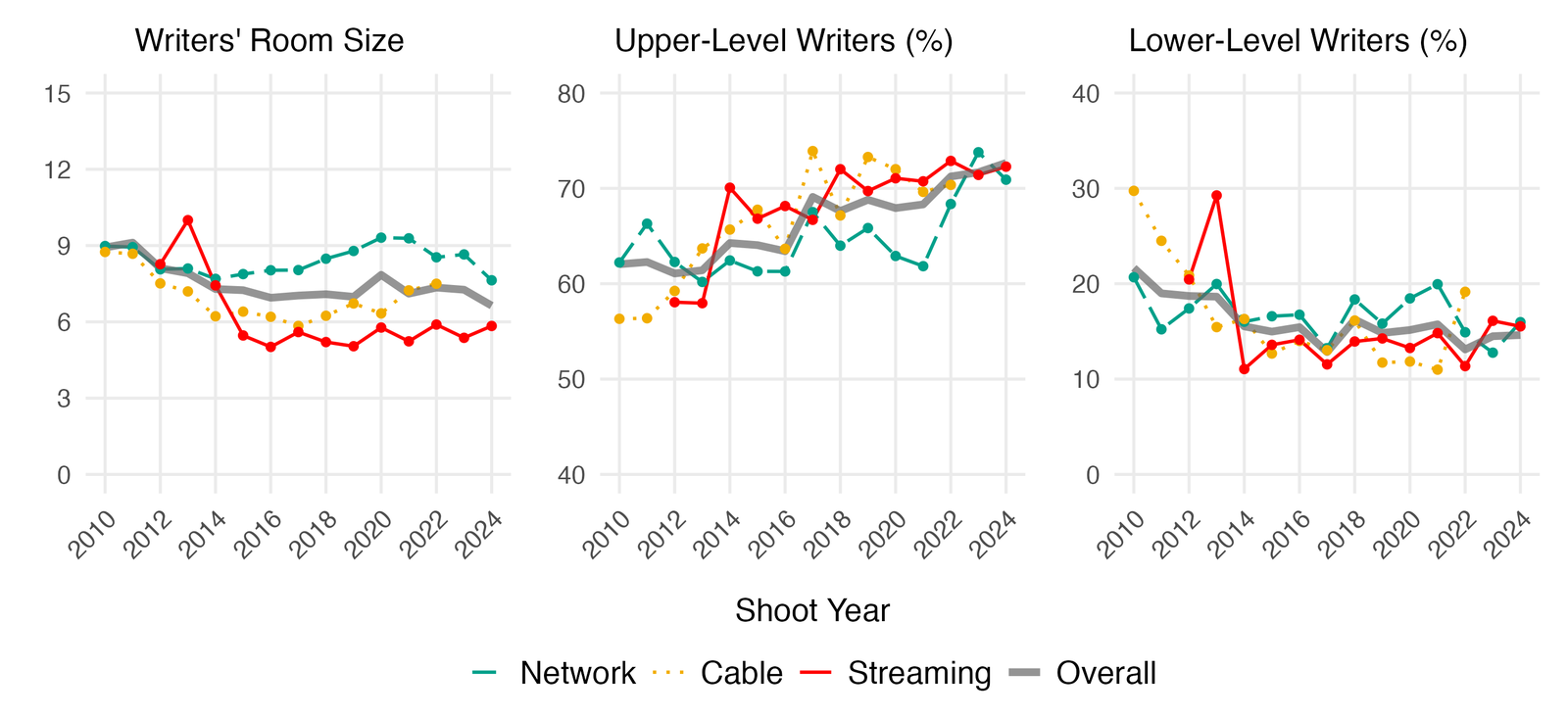
Trends from 2010 to 2024 in writers' room size, share of upper-level writers, and share of lower-level writers, by network, cable, streaming, and overall

Dessauer, Julia and Kwan Woo Kim (equal authorship). “Short Order: Restructuring Hollywood’s Writers’ Rooms in the Age of Streaming.” Invited for the Poetics Special Issue on Technology and Inequality in Culture, Media, and the Arts.

Pairing ninety interviews with population data on two decades of television shows, we show that the rise of streaming services led to the contraction of writers’ rooms, and that the remaining seats were disproportionately allocated to senior writers — narrowing the pipeline through which new writers build their careers. The paper illustrates how technological disruption can activate opportunity hoarding among incumbents, and foreshadows how new technological interruptions, including artificial intelligence, may raise the bar for entry into creative industries.

Future Projects

My upcoming work on gatekeeping in creative industries builds on “Short Order,” which shows how the pipeline for early-career writers has narrowed in the streaming era. We predict that writers from underrepresented groups face greater disadvantage as the industry undergoes contraction and technological shifts. Drawing on an original dataset that links employment records to the demographic composition of writers’ rooms, we will test whether and how room contraction and the adoption of AI widen disparities by race-ethnic backgrounds. This project will add to the literature on typecasting and inequality in creative industries, and offer insights into the impact of AI on elite labor markets.