Kim, Kwan Woo. “Competition or Credentialism? The Occupational Presence of Immigrants and European Attitudes Toward Welfare and Immigration.” Revise and Resubmit, Socio-Economic Review.
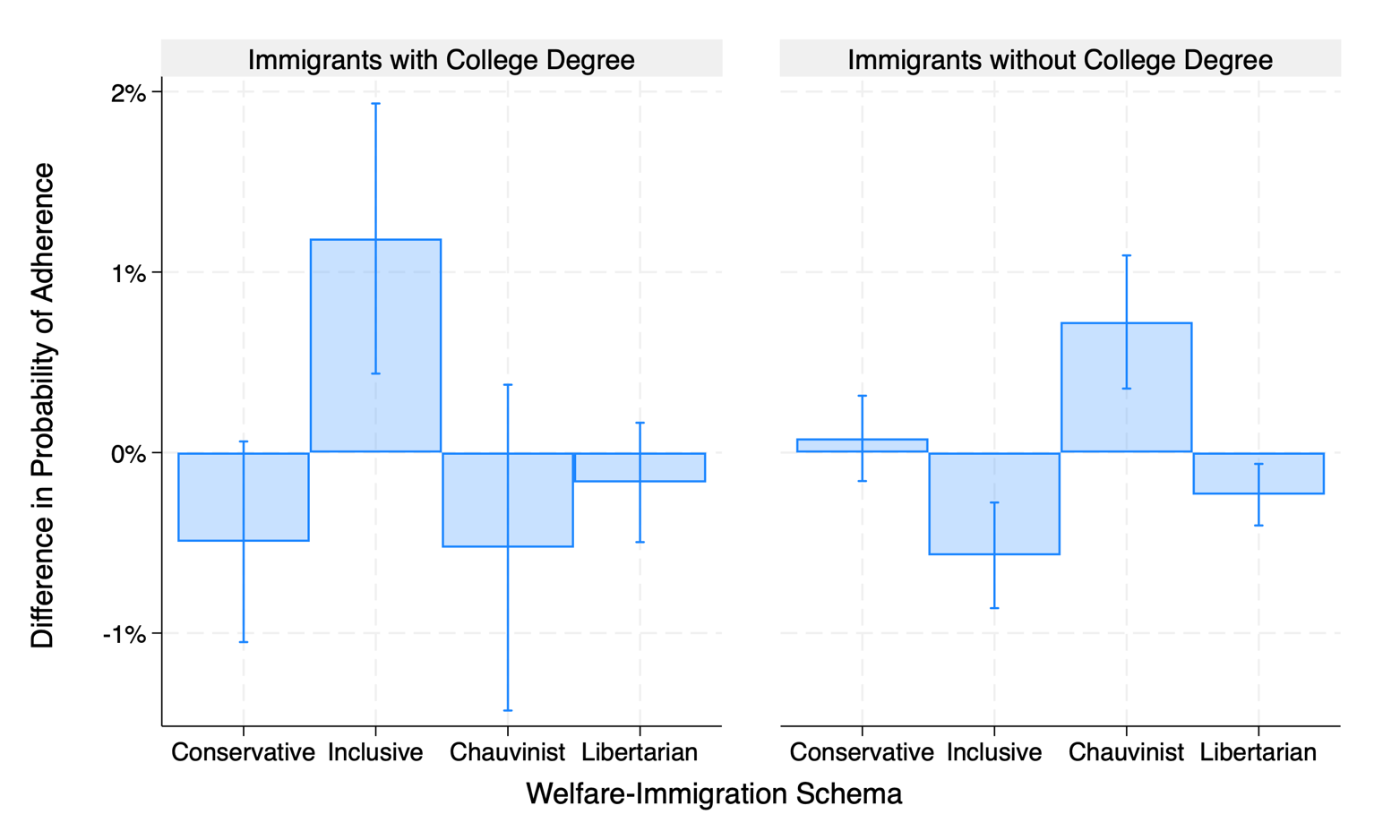
Using the European Social Survey and latent class analysis, I identify four attitudinal clusters to which European workers adhere, and correlate each worker’s welfare-immigration attitudes with the share of immigrants in their occupation. Across education levels, workers lean inclusive (pro-welfare, pro-immigration) in occupations where college-educated immigrants make up a larger share, and chauvinist (pro-welfare, anti-immigration) where less-educated immigrants make up a larger share. This finding largely supports the credentialism hypothesis: native-born workers’ exclusionary attitudes on welfare and immigration track immigrants’ perceived lack of credentials more than any perceived occupational threat posed by their presence.